By Sue Luse
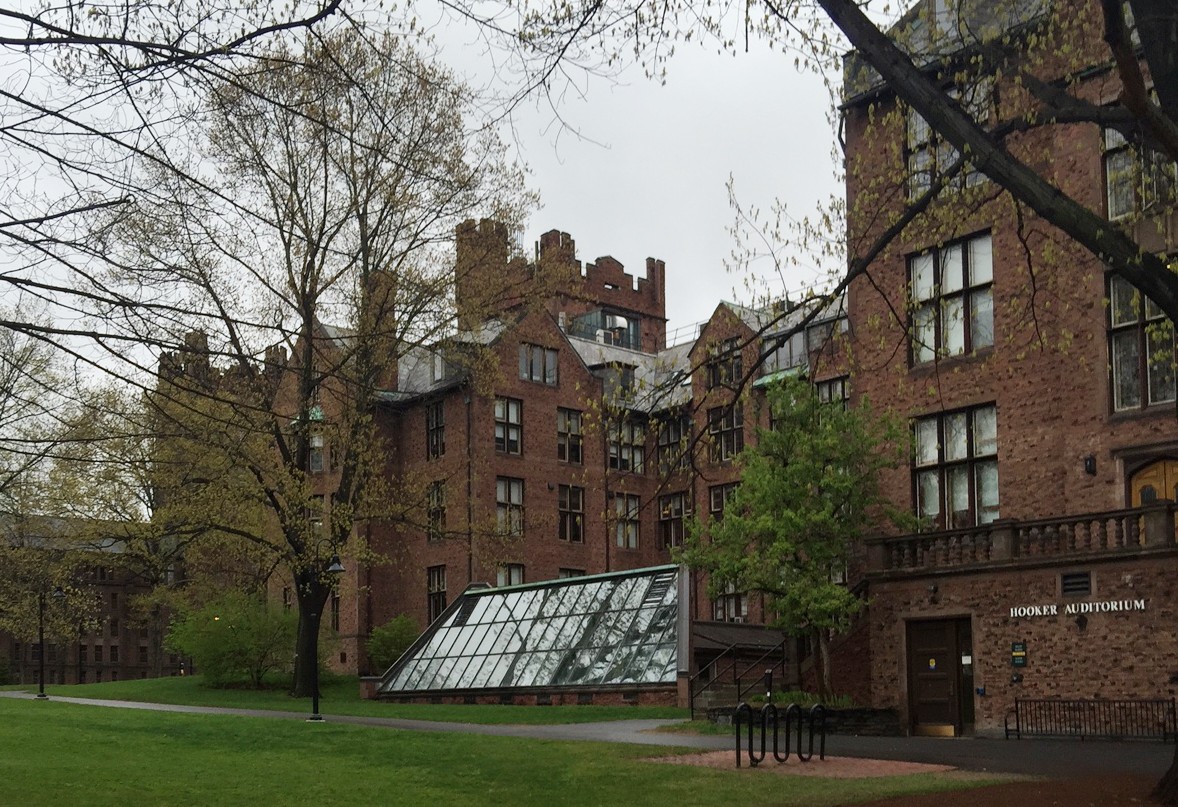
I had an absolutely awesome tour of Yale, even though it was a really cold day! This charming campus is located in in the heart of down town New Haven, Connecticut, which is known as a vibrant community full of opportunities. As Yale’s President Richard Levin has said, “New Haven is large enough to be interesting but small enough to be friendly.”

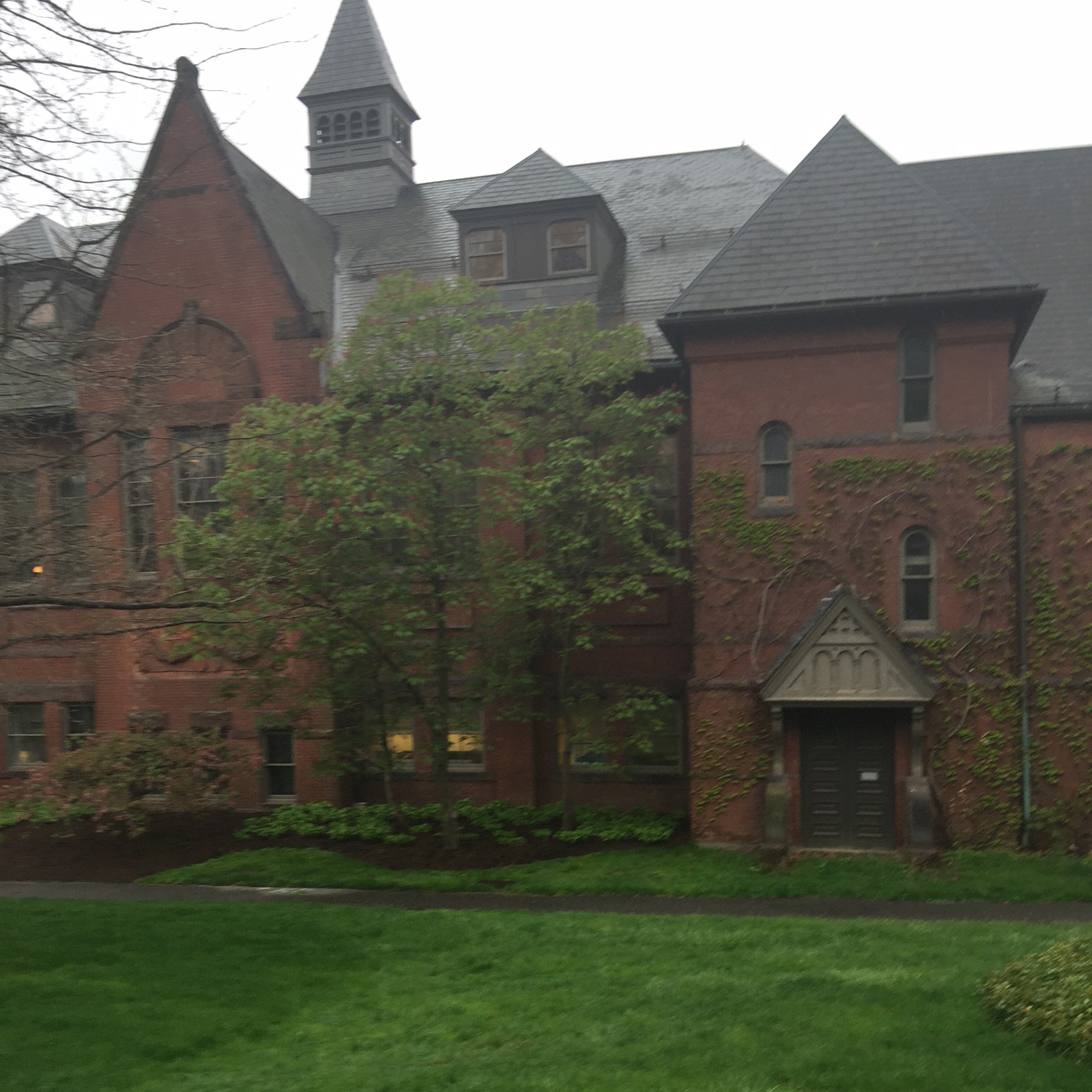
I was very impressed with Yale’s Residential College System. Each of the twelve residential colleges has its own distinctive architecture, courtyard, dining hall, and library, as well as activity spaces. It reminded me of Harry Potter and Cambridge and Oxford. It is often said that most freshman quickly become convinced that their residential college is the best residential college.

Freshman are randomly assigned to one of the twelve residential colleges giving them a built-in community from the moment they arrive on campus. Each residential college has approximately 450 students and this is their home for all 4 years at Yale. The residential colleges reminded me of a fortress home away from home. They are comprised of suites with a large common room and bathrooms shared by approximately 8 students. These colleges bring together faculty and students forming a unique bridge between academic and social life.


Yale has what they call a “Shopping Period” – the first 10 days of each semester are a time when students can visit dozens of classes that interest them in order to decide which ones they want to take. Students build their class schedule as they “shop”. During this shopping period students also meet with academic advisors to sort through all of the academic opportunities. Through this process, students formulate their most fulfilling academic semester!

While Yale evaluates each applicant as an individual, academic strength is their first consideration. A rigorous high school courseload is very important. Yale likes to see students take advantage of any advanced opportunities at their high school.You may submit scores from the SAT and any two SAT Subject Tests or the ACT Plus Writing Test. Interviews are not required but encouraged. Remember that the goal of any interview is an outside “validity check” to prove that you have accurately presented yourself. Two letters of recommendation are required preferably from teachers who taught you during your junior or senior year. Teachers need to mention specific example(s) of how the students perform in the classroom, so it’s a good idea to give your teacher specific examples to use in this letter. You should allow your character to come out in your essay. This is your opportunity to show Yale how you think, what drives you and that you are intellectually passionate. Definitely be yourself in your essay. It’s also a great idea to have a friend or parent read it and see if it actually sounds like you. Your extracurricular activities are important. Yale likes to see that you are driven by something outside of the classroom.


By Sue Luse
Located in Brooklyn, New York, Pratt is the opposite of Pace or New York University. This campus is a very peaceful place with lots of green, open spaces. Pratt is among quaint old brownstones within the historic Clinton Hill residential neighborhood. Lots of cute little eateries and plenty of families, kids and dogs walking around. I felt very safe on this campus. This place looks and feels like an art school and is only 25 minutes from the art center of the world – Manhatten. Pratt students enjoy the campus’s uniquely acclaimed and contemporary sculpture garden. There is also a subway stop on campus.
The mission of Pratt Institute is to educate artists and creative professionals to be responsible contributors to society.
Pratt is home to :
Pratt has always believed that educating generalists rather than specialists (Industrial designers rather than car designers, writers rather than journalists) is essential in supporting our mission: to educate creative individuals to be leaders in their fields. The fact that this philosophy is reflected in the professional world with the boundaries between various art forms disappearing confirms this approach.
By Sue Luse
Pace is a private metropolitan New York multi-campus university. Students can get all the classes they want at either campus and don’t need to go back and forth. The New York City campus is located in lower Manhattan near Wall Street. This campus is in the heart of one of the city’s most vital and dynamic areas – alive with activity. Great location – only blocks away from Grand Central Station.
The Pleasantville campus in mid-Westchester County is set on 200 acres of rolling countryside where Pace flourishes as the only private university in the county, and offers a broad range of undergraduate degree programs in a stimulating collegiate environment. The Briarcliff annex, a short distance from Pleasantville, is the location of residence halls, recreational facilities, and administrative offices. A shuttle bus provides continuous service between the campuses. Pace’s School of Law, and a center for other graduate courses in business, public administration, and computing are located in White Plains, the hub of Westchester County.
All campuses are linked by the powerful, goal-oriented features of a Pace University education—personal attention, flexibility, and responsiveness to the needs and expectations of a diverse and demanding student population.
Pace is home to the renowned Lublin School of Business which offers a 5-year MBA and CPA program. Location, location, location – Pace’s location affords business students with great internship opportunities on Wall Street. In fact, Pace is ranked in the top 5 universities in the country for business internships. They offer an exceptional Finance major for prospective investments bankers. Go to Lublin School of Business for more information.
Pace also has much to offer in the area of performing arts – especially musical theater and acting. They also offer Commercial Dance, not ballet. Again Pace’s location presents students in the performing arts with ample opportunities.
Aside from the Lublin School of Business and the Dyson College of Arts and Sciences, Pace is also home to the College of Health Professions, School of Education, and the Seidenberg School of Computer Science and Information Systems.
Pace accepts either the SAT or ACT. The average GPA is 3.3 and the average ACT score is 23. Unlike New York University or Columbia, Pace offers generous merit scholarships.
All different kinds of kids go to Pace – the student body is very open and accepting of everyone. Most Pace students are driven, self-motivated, appreciate diversity and are the independent type. The gender demographics are 60% female/40% male.
Pace University is a great option for kids who want to go to college in New York City and are interested in either business or performing arts. It’s an especially great option for students who can’t get into New York University or Columbia and are in need of merit scholarships.
By Sue Luse and Lindsay Berg, Class of 2003
Perched atop a hill overlooking Long Island Sound and the Thames River, Connecticut College cherishes its small class sizes, honor system and dedicated professors. Separated from downtown New London on a hilltop originally considered to be “the finest college site in the world,” Conn College (as it is commonly referred to) is its own little slice of New England. Students wander across the grounds, stroll through the 750-acre arboretum, live and study in Gothic and Georgian style buildings, utilize state of the art academic and athletic facilities, and compete in the NESCAC conference. It is two hours away from New York and Boston. With its close proximity to Providence, New Haven, and several quaint New England towns, students find themselves with ample opportunity to explore the East Coast.
Founded in 1911 after Wesleyan decided to deny entry to women, Conn originally opened as a women’s college and became co-ed several decades later in 1969. Known as one of the “little ivies,” Conn prides itself on educating “Students to put the liberal arts into action as citizens in a global society.”
Connecticut College students find themselves in small classes where discussion, dialogue and writing play key roles in academics. Professors engage their students, include them in research, and act as mentors and friends. Moreover, professors support student independence, and self-designed research and independent studies are commonplace. This focus on individualized thought has led Conn to produce more Fulbright Scholars than any other Liberal Arts School in the country. Conn is strong in the humanities, sciences, and arts, and to help craft a well-rounded education, students are required to take seven courses from a wide area of disciplines. First year students also enroll in a freshman seminar year, and Conn’s incredible CELS (Career Enhancing Life Skills) program provides funding for all students to pursue internships during the summer between their junior and senior year.
Connecticut College’s honor system dictates all walks of life on campus, and it fosters Conn’s open and friendly environment. Based on trust and mutual respect, Conn students created the code in 1922. At Conn, exams are self-scheduled and are not proctored; this allows students to take their finals when confident and ready, and students and professors trust one another to be ethical and respectful.
Connecticut College does not have a Greek system, instead students find themselves awash in activities ranging from Capella group concerts, dances, theater, renowned speakers, art trips to New York City, outings to Harkness Beach, boat trips to Block Island, ice cream and pizza in neighboring town Mystic, Camelympics (dorm wars), and Floralia (a day-long spring music festival).
By Sue Luse
Students are very involved and exhibit an abundance of energy and passion. The student body of 2,800 are diverse, curious and incredibly vibrant! They are busy and very obviously loving every minute of it. On this campus you can feel free to explore what interests you and enjoy being yourself.
While all undergraduate students are required to live on campus, you will find the housing is unique – well worth checking out: Residence Halls
Wesleyan is a small liberal arts college, and while there are many, each one is different. Like Wesleyan, most have bright students and great faculty; however, Wesleyan stands out for it’s reputation as a research university. They are committed to research but not at the expense of their faculty, so Wesleyan’s science faculty teaches one less class per semester in order to allow time for research. Some examples of areas where students have collaborated with professors: translating a French novel, a documentary about Argentina, dance choreography, and the economic impact of climate change.
Wesleyan promotes the idea that how you come to know things is more important than what you come to know. Thinking creatively is emphasized.
Four blocks from campus is the downtown area located on the banks of the Connecticut River. Middletown is not a “typical” college town that mostly caters to students. Lots of coffee shops and dining establishments. Wesleyan is not far from Millers Pond State Park Reserve – great place to go hiking. Wesleyan is also only approximately an hour and a half from New York City.
Rather small Greek life – 3 fraternities and 2 sororities. While many of Wesleyan’s athletes are Div 1 caliber, most students tend to be more excited about academics than sports. Wesleyan’s athletics facilities are considered to be the best in the country and are open to everyone.
By Sue Luse
Quinnipiac (in case you’re wondering it’s pronounced KWIN-uh-pe-ack) is located in Hamden, Connecticut, with 6,200 undergraduate students. There are three campuses: Mount Carmel Campus is home to most of the residence halls, academic buildings, University offices and athletic fields; York Hill Campus, only a 1/2 mile from the Mount Carmel Campus, is home to the Rocky Top Student Center, very new residence halls, a parking garage and the TD Bank Sports Center; North Haven Campus, just a short drive from the Mount Carmel Campus, houses the School of Health Sciences, the School of Nursing, and the School of Education.
Hamden is a safe suburb with easy access to New York City by train. Quinnipiac is located very near Sleeping Giant State Park – beautiful place to hike.

To give you an idea what type of students comprise Quinnipiac, here is information on their Class of 2016:


Quinnipiac offers 58 undergraduate programs, including degrees in the arts and sciences, business, communications, engineering, health sciences and nursing. They excel in Health Sciences and have a great Pre-Med Program. Quinnipiac is slated to open the Frank H. Netter MD School of Medicine in the Fall of 2013. They are also known for excellence in the areas of technology, business and communications.
Being only 1 1/2 hours from New York City means internship opportunities are abound. Quinnipiac boasts having 45 students interning with ESPN and there are even students who have interned with the David Letterman Show.
By Sue Luse
Located in the state capitol city of Hartford, Connecticut, Trinity College looks like a traditional New England liberal arts school. However they espouse to act in untraditional ways with groundbreaking programs and staff as well as an urban-global education commitment. Trinity’s 100 green-acre campus is dotted with historic buildings. Given it’s urban location, the surrounding area is rather “sketchy”, but there is plenty of campus security.
A rigorous institution with a broad choice of majors in the liberal arts and sciences, including engineering. Trinity’s academic experience includes the following key characteristics:

When evaluating candidates for admission, high emphasis is placed on your high school transcript – both grades and course selection. While standardized test scores are taken into consideration, Trinity admits students with a wide range of test scores and there is no minimum score required. They require one guidance counselor recommendation as well as two teacher recommendations – and prefer that one of these be from a teacher that can comment on your writing, i.e. an English teacher. Interviews are not required but are strongly encouraged. Interviews can take place via Skype or a local alumni. Approximately 30-40% of candidates are accepted.


By Sue Luse
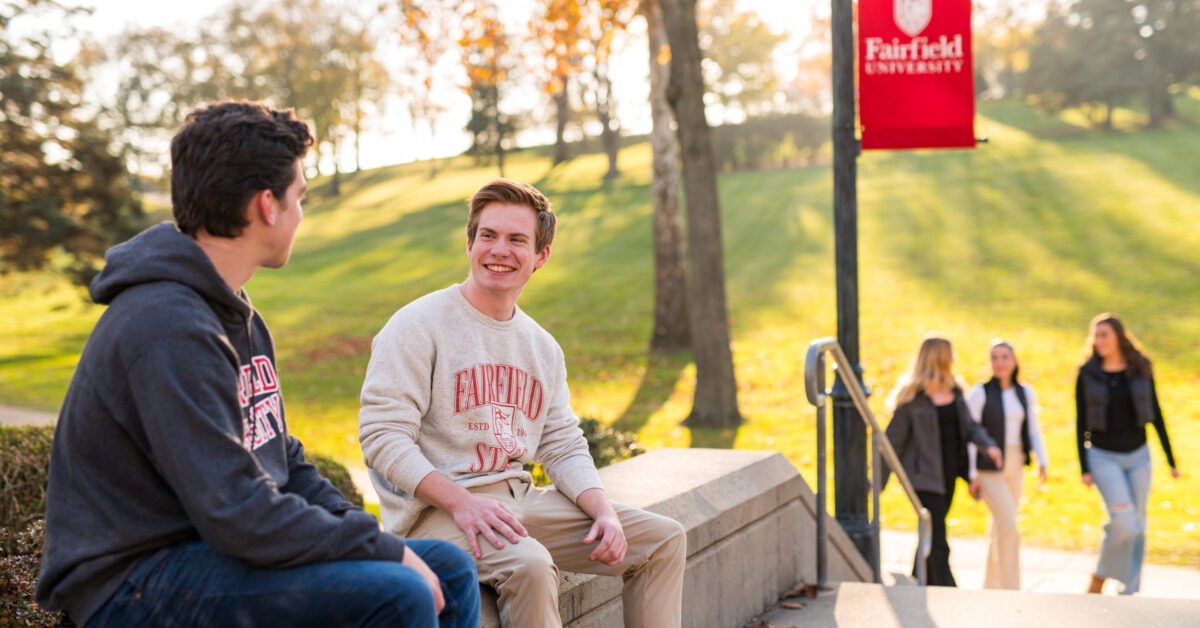
Fairfield University is one of 28 Jesuit universities in the United States. They promote a holistic approach to education with the intent to educate the whole person – mind, body and spirit. They are committed to offering a comprehensive core curriculum, and distinctive living and learning experiences. Fairfield believes in lifelong learning and the pursuit of social justice and global citizenship. They are recovering well from Hurricane Sandy and with their own power plant, they did not lose power during the hurricane.

Located approximately one hour north of New York City, in Fairfield, Connecticut, which is considered a traditional New England town. Fairfield County’s population of 55,000 comprises a rather affluent community, with a reputation for being a very safe area. Fairfield is also considered to be a “beach town” with approximately 300 seniors living at the beach.
Many regional students from Massachusetts, New York and New Hampshire. Recently acquiring more students from the Midwest area. Lots of Jewish, Muslim and Catholic students. Fairfield is not a “suitcase school” where students tend to disappear on weekends. Roughly 50% of students attended a private high school and roughly 50% attended a public high school. Their student body is approximately 20% diverse.
Very socially active student life and trips to the City are popular! Fairfield is conveniently located near New York City, Providence, Hartford and New Haven.
Fairfield’s location puts numerous internship opportunities at students’ fingertips and most take advantage of this during their junior or senior year.
More than 400 students participate in intercollegiate, varsity athletics at the University. More than 1,500 are active in club sports, intramurals, and other recreation and fitness programs. While Lacrosse is very popular, Fairfield also offers the following varsity sports – baseball, men’s and women’s basketball, men’s and women’s crew, men’s and women’s cross country, field hockey, men’s and women’s golf, men’s and women’s soccer, softball, men’s and women’s swimming and diving, men’s and women’s tennis, and women’s volleyball.

Housing is guaranteed for four years to all incoming freshmen. Approximately 80% of all students live on campus in a traditional residence hall, suite-style residence hall, an apartment or townhouse. All freshmen live together in traditional-style halls, and sophomores live mostly in traditional-style halls with some living in suite-style halls depending upon availability. Approximately one-third of the junior class lives in suite-style halls. Seniors live in townhouses, apartments, or off campus (on a limited basis).
By Sue Luse
Georgia Tech’s campus occupies 400 acres in the heart of the city of Atlanta. It is often said that Atlanta was built around Georgia Tech, and most students feel they experience the best of both worlds – lush green space in the middle of campus and all the advantages of being located in an urban area. I had a great tour and was impressed with the bustling student union, the library full of enthusiastic students – many working with two computers, the updated labs and lecture halls and the obvious school spirit.
All freshman enjoy The Freshman Experience. There are over 400 student organizations to become involved in as well as 583 intramural teams. Georgia Tech boasts a 300,659 square-foot recreation center (rated #1 in the country in 2011 by Princeton Review)
Georgia Tech offers coursework leading to degrees in thirty-four undergraduate majors, forty-seven master’s programs, and thirty doctoral programs as well as preparatory programs for law, dental, medical, and veterinary schools. Undergraduate and graduate degrees are offered in the Colleges of Architecture, Computing, Engineering, Sciences, the Scheller College of Business, and the Ivan Allen College of Liberal Arts.
Georgia Tech is a selective institution; therefore, the freshman application process is competitive in nature. Their holistic review includes consideration of four primary factors:
Georgia Tech Admissions Staff don’t look at your major choice, recommendation letters, interviews or transcripts. They are interested in research, resume’s and especially your essay. Georgia Tech’s admission rate is 55%.
Georgia Tech awards undergraduates more than $105 million in need and merit-based aid. Students also use work, research, and study abroad experiences to help make Tech affordable. Every student in their co-op program, 87 percent of students in their internship program, and 92 percent of students in their work abroad program are in paid positions. SmartMoney magazine named Georgia Tech as the #1 best tuition investment in the United States for the second year in a row. Their job placement is highly notable and the yearly median starting salary for graduates with a bachelor’s degree from Tech is $57,300.
While maintaining a diverse student body, about half of Georgia Tech’s population are from Georgia, with approximately 35% Non-Georgia (U.S.) and 14% are international students. Approximately 65% of students are male. Greek life is popular with roughly 1/3 students participating.
By Sue Luse
Agnes Scott is located in downtown DeCatur, Georgia, which is part of the metropolitan Atlanta area. Decatur offers eclectic shops and restaurants within easy walking distance. Atlanta is well known for being home to a large number of colleges.
Agnes Scott is an independent national liberal arts college for women and is affiliated with the Presbyterian Church (U.S.A.). If you feel you’re a “rare bird” a “wallflower” or simply prefer to “march to the beat of your own drum” while experiencing high rigor academics, you will likely find Agnes Scott very attractive. While encouraging women to think deeply and engage the economic and social challenges of their times, Agnes Scott students are taught how to successfully navigate male-dominated industries such as Science. Agnes Scott also prepares women to to handle the complexities of the business world. While academics are key, emotional and social development are intrinsic to the Agnes Scott experience. Students enjoy many social events with affiliate Atlanta and Georgia colleges. Two key benefits of attending a women’s college are the development of innate confidence and an increase in the likelihood of attending graduate school.
Also unique to Agnes Scott is the option for an evaluative interview verses submitting test scores.
Comprehensive fee for ’12-’13 school year is $43,691, which includes tuition, room and board, and student activity fee.
Living on campus is central to your learning experience. First year residence halls are configured into living, learning communities. Students are grouped according to the first year seminar in which they are enrolled fostering an environment in which they live and learn together. It’s easy to make new friends and leads to an atmosphere of creative learning outside the classroom.
By Sue Luse
Emory University is located on a beautiful, leafy campus in Atlanta, Georgia’s historic Druid Hills Suburb. Students enjoy four distinct seasons with temperate weather most of the school year. Emory’s one of the southernmost schools among the nation’s top-ranked universities.This institution is recognized for its local and global commitment to service and volunteer work. Emory strives to enhance the quality of life in the Atlanta area through health care, cultural support, and volunteer service.
The Admissions Staff at Emory are dedicated to getting to know who you are as a student and what kind of student you will be at Emory. Their regional Admission Counselors are very interested in familiarizing themselves with prospective students.
Below are the estimated expenses for the 2012–2013 academic year. Some of these costs are set expenses you will pay to Emory; others are estimated for travel, incidentals, and other costs, which may vary, yet Emory includes them when putting together a student’s need-based award.
| Tuition | $42,400 |
| Fees | $580 |
| Room | $7,200 |
| Food | $4,800 |
| Books | $1,100 |
| Travel and Incidentals | $2,100 |
| Total | $58,180 |
Emory is committed to meeting 100 percent of demonstrated financial need for all accepted students. Because Emory is committed to making their institution affordable, 68 percent of undergraduates receive financial aid. Also, several Merit Scholarships are available.
By Sue Luse

The University of Wisconsin Superior is located in Superior, Wisconsin, a city of 27,000 at the western tip of Lake Superior. Many students choose this institution because of its size, small classes, and the the student-to-faculty ratio of 18 to 1. UW Superior is considered a “hidden gem” in its ability to offer the attributes of a private education at public school costs.
By Sue Luse
Vanderbilt University is located a mile and a half southwest of downtown Nashville. The 330 acre campus is home to more than 300 tree and shrub varieties and was designated a national arboretum in 1988. A beautiful, preppy campus with very friendly students. While the campus is full of activity it maintains a peaceful atmosphere.
Vanderbilt offers undergraduate programs in the liberal arts and sciences, engineering, music, education, and human development, as well as a full range of graduate and professional degrees. An internationally recognized research university, Vanderbilt maintains strong partnerships among its ten schools, neighboring institutions and the community.
The city of Nashville has a population of 1.2 million people and is filled with very friendly people and great restaurants. It is definitely a “music city” – all kinds of music. Besides great musicians, Nashville is also known for sports and great little neighborhoods. Hillsburough Village is a fun and interesting student hangout.
Vanderbilt conducts its Information Sessions in a very fun and engaging manner. At the Information Session I attended, they used the question “What did you want to be when you were 5?” as an opener. There were students from all over the country conversing and enjoying themselves. They discussed how finding “the right fit” in a college can be difficult and that unfortunately you can’t visit every college. They suggested picking five things that are imperative to you and looking for those attributes. The admissions counselors also encouraged students to begin exploring colleges early on.
For more information, read about Ryan Luse’s visit (a separate trip from Sue’s visit) to Vanderbilt University in the latest addition to our College Spotlight series.
Read about Ryan Luse’s visit (a separate trip from Sue’s visit) to Vanderbilt University in the latest addition to our College Spotlight series.
The College of St. Scholastica has a warm, inviting campus with an old fashioned feel set on 180 forested acres overlooking Lake Superior. Students enjoy hundreds of miles of biking and hiking. Located in Duluth, MN, a great college town known for it’s vibrant music scene, nightlife and cheap restaurants. The Duluth area is inhabited by 25,000 college students (1/5 of the area’s population).
(12-18 credits, fall and spring semesters)
$15,104 per semester ($30,208 annually)
(if below 12 credits or over 18 credits)
$943
$395 per credit
The University of Minnesota Duluth (UMD) is a comprehensive regional university. Undergraduate students can choose from 13 bachelor degrees in over 80 majors. UMD consistently ranks among the top midwestern, regional universities in U.S. News and World Report’s “America’s Best Colleges” issue. Providing an alternative to both large research universities and small liberal arts colleges, UMD attracts students looking for a personalized learning experience on a medium-sized campus of a major university.
UMD’s campus consists of more than 50 buildings on 244 acres overlooking Lake Superior, all built since 1948. Most UMD buildings are connected by concourses or hallways, providing convenience for all students year round. UMD is also home for the Tweed Museum of Art, the Marshall W. Alworth Planetarium, Weber Music Hall, and the Marshall Performing Arts Center.
UMD’s fall 2012 enrollment was 11,491 with approximately 40% of the students from the Twin Cities area and an additional 40% from the rest of Minnesota.
UMD’s most popular programs are Accounting, Business, Biology, Communications, Criminology, Graphic Design, Mechanical Engineering, Exercise Science, Psychology, and Education (especially Elementary Education). The Elementary Education program is four and a half years, and includes Special Education.
The priority deadline is December 15, however engineering students are highly encouraged to apply earlier.
Early application is also advised for those seeking scholarships.
Applications may be made directly to UMD. As an alternative, students may complete an application to the U of M Twin Cities campus and contact UMD to request that their application be shared with UMD for no additional application fee. UMD will review shared applications beginning in late October.
Most applications are reviewed and admission decisions made within a 3-week turnaround time.
Jacksonville University is located in a beautiful riverfront setting in suburban Jacksonville, across the St. Johns River from downtown and just minutes from the Atlantic Ocean. The 190-acre campus includes a half-mile of riverfront, oak-lined paths, and a mix of historic and new campus buildings. 3500 students
Most JU students are from Florida and the southeastern and northeastern United States. They represent 45 states, Puerto Rico, the Virgin Islands, and 50 foreign countries. The male-female student ratio is about 1 to 1.
The College of Arts & Sciences offers traditional liberal arts and science majors, plus programs in nursing, education, and pre-professional education. The College of Fine Arts has outstanding programs in art, dance, music and theater. The Davis College of Business occupies a new, technologically advanced facility.
Beginning Fall 2012, traditional freshmen can participate in Jacksonville University’s Four-Year Graduation Guarantee.
A guarantee for incoming first-year students that ensures their ability to graduate in four years provided they adhere to the stipulations of the agreement. If they are unable to graduate on time and have met the requirements of the agreement, the University will assume their tuition costs (minus any state and federal aid for which they qualify) until they graduate.
Flagler College
74 King Street St.
Augustine, Florida 32084
904-829-6481
24 ACT, 3.4 GPA, 40 percent accepted.
VERY affordable. No merit scholarships because of the low cost.
| Tuition | $15,340 |
| Room | $4,070 |
| Meal Plan (Full) | $4,280 |
| Total Costs | $23,690 |
Florida Agricultural and Mechanical University, commonly known as Florida A&M or FAMU, is the nation’s largest historically black university by enrollment,[3] is located in Tallahassee, the Florida state capital, and is one of eleven member institutions of the State University System of Florida. FAMU is also one of Florida’s land grant universities.
Founded on October 3, 1887, Florida A&M University (FAMU) is part of the State University System of Florida and is fully accredited by the Southern Association of Colleges and Schools.
Distinguished by lush foliage and massive oaks, FAMU’s main campus comprises 156 buildings spread over 422 acres atop the highest of Tallahassee’s seven hills.
The university also has several satellite campuses including a site in Orlando where the College of Law is located and sites in Miami, Jacksonville and Tampa for its pharmacy program.
Florida A&M University enrolls nearly 12,000 students from the United States and more than 70 countries such as India, Egypt, Trinidad, Netherlands, China, Bahamas, Jamaica, and Brazil.
Florida A&M University offers 62 bachelor’s degrees and 39 master’s degrees. The university has 13 schools and colleges and one institute. The university also offers a juris doctor at its College of Law in Orlando. FAMU has 11 doctoral programs which includes 10 Ph.D. programs: chemical engineering; civil engineering; electrical engineering; mechanical engineering; industrial engineering; biomedical engineering; physics; pharmaceutical sciences; educational leadership; and environmental sciences.
Main article: Marching 100
The FAMU Marching “100″ under the direction of Dr. William P. Foster, was invited by the French government to participate in the Bastille Day Parade as the official representation from the United States. This event was held in celebration of the bicentennial of the French Revolution.
The Marching “100″ was named the “Best Marching Band in the Nation” by Sports Illustrated (August 1992). The band received national recognition in January 1993 when it performed in the 42nd Presidential Inauguration Parade by invitation of Bill Clinton. The band has also performed in the Super Bowl and in the 44th Presidential Inauguration Parade.
In 2011, a band member was beaten to death in a hazing incident. Since the 2011 death, a series of reports of abuse and hazing within the band have been documented. In May of 2012, 2 faculty members resigned in connection with a hazing investigation and 13 people were charged with felony or misdemeanor hazing crimes.
Top undergraduate programs are architecture; journalism; computer information sciences and psychology. FAMU’s top graduate programs include pharmaceutical sciences along with public health; physical therapy; engineering; physics; master’s of applied social sciences (especially history and public administration); business and sociology.
Fees Per Credit Hour
Undergraduate residents: $124.01
Undergraduate nonresidents: $522.03
Graduate resident: $268.23
Graduate non-resident: $884.75
Law resident: $288.75
Law nonresident: $943.43
Other Fees
Rattler Card ID: $5
Athletic Fee: $11.30
Technology Fee: $4.43
Health Fee: $55
Transportation Fee: $59
Room rent (average): $2,025.47 per semester
Grants, scholarships, loans and employment opportunities are available to help families meet the cost of investing in a FAMU education. For information, visit www.FAMU.edu/UniversityScholarships.
(2008-2009)
|
Full-time |
10,509 |
|
Part-time |
1,339 |
|
Female |
6,940 |
|
Male |
4,908 |
|
Florida |
9,215 |
|
Non-Florida |
2,633 |
|
Black |
10,631 |
|
White |
596 |
|
Hispanic |
268 |
|
Asian |
141 |
|
Native Indian |
27 |
|
Non-Resident Alien |
131 |
|
Not Reported |
54 |
Florida Agricultural and Mechanical University (FAMU) is an 1890 land-grant institution dedicated to the advancement of knowledge, resolution of complex issues and the empowerment of citizens and communities. The University provides a student-centered environment consistent with its core values. The faculty is committed to educating students at the undergraduate, graduate, doctoral and professional levels, preparing graduates to apply their knowledge, critical thinking skills and creativity in their service to society. FAMU’s distinction as a doctoral/research institution will continue to provide mechanisms to address emerging issues through local and global partnerships. Expanding upon the University’s land-grant status, it will enhance the lives of constituents through innovative research, engaging cooperative extension, and public service. While the University continues its historic mission of educating African Americans, FAMU embraces persons of all races, ethnic origins and nationalities as life-long members of the university community.
Florida Agricultural and Mechanical University holds the following values essential to the achievement of the university’s mission:
A former student of mine, now a sophomore at Northeastern University in Boston, wrote a wonderful piece entitled “Why I’m glad I chose Northeastern” for his former high school newspaper. I’ve posted it in my College Spotlight series http://www.collegeexpert.net/college-spotlight-northeastern-university/ on my website with his permission.
For those of you interested in colleges that offer co-op/internship opportunities, you will find this article enlightening.

Hamilton College, Clinton, NY
After our visit to St. Lawrence, Tom and I drove down to the beautiful Finger Lakes area in central New York. We made our way to Mirbeau Inn & Spa named “Best for Romance, Cuisine & Yoga!” This inn became our home for three days as we explored the surrounding areas and colleges.
Here are my notes and observations about Hamilton College, in Clinton, New York.
Clinton
Campus

Hamilton College Dining Hall
Housing
Academics
Athletics
Extracurriculars
Career information

Hamilton College Walkway
Addmissions
Financial aid
What separates Hamilton from the others? The friendly, warm, welcoming atmosphere, centrally located, not shared with a major
city. – Sue Luse
Syracuse University is located in the city of Syracuse where you find the arts, shopping, and restaurants. Lake Onondaga is about 2 miles to the north. About 40 miles farther to the north is Lake Ontario. 168,000 people live in Syracuse and 700,000 in the metro area. Syracuse is a private university with 10,000 undergraduates. It’s close to Hancock International Airport. Syracuse is working to re-invent the South Side. Syracuse University business and journalism students are involved in the effort.

Our tour guide from Michigan
Notes and Observations…
Campus

Syracuse Music Building
Admissions
Academics
If students are looking for a medium-sized university with many different colleges and majors available in an urban setting, Syracuse
would be a good option – especially if students are looking for big time athletics and legendary school spirit! – Sue Luse

Windy day at St. Lawrence Univ.
Tom and I drove through the beautiful Adirondack Mountains to the charming town of Lake Placid, home to the Winter Olympics. We loved Lake Placid even though lightening knocked out power to Lake Placid and our hotel. Oh well, better then a flat tire!
St Lawrence University, Canton, NY
Notes and Impressions…
Campus
Academics

An outdoor class
Admissions

Student workout area - amazing place!
Activities
Overall, beautiful campus, impressive facility, all kinds of students would be happy here. Great location by the mountains, somewhat
isolated, but happy students. – Sue Luse
Bard College is located on the Hudson River in the tiny village of Annandale-on-Hudson in New York. This is a beautiful area, with lots of outdoor opportunities, and still close to New York City.

Sue at Skidmore
Skidmore College is located in Saratoga Springs, NY. In the summer during the racing season the population triples. Students move in after labor day, when all the tourists have left and have this cute town all to themselves. The movie Sea Biscuit was filmed here. There’s a big racetrack in town. Skidmore is a mile and a half from downtown. It’s surrounded by mansions and the North Woods, and close to the Adirondack Mountains. Beautiful campus, lots of trees and quads.
Here are some fun facts, stats, and my observations:
Academics
Arts Track
Liberal Arts Track
General
Admissions
Campus Tour

Amanda - best guide ever!
Skidmore is a good fit for our Midwest students. – Sue Luse
Vassar is located in Poughkeepsie,NY, about an hour and a half from NYC, on the Hudson river. The college campus is a combination of old and new architecture with a stunning library and performing arts center. We stayed in the historic town of Rhinebeck, about 20 minutes away.
Some notes about Vassar College:
For more information, check out Vassar’s website: www.vassar.edu
- Sue Luse
Every September when all our students go back to school, my husband Tom and I hit the road to visit colleges. This year we picked New York! Since my daughter Chelsea lives in Manhattan, we planned a weekend in the City with Chelsea and our dear friends Chris and Lauren. And what a weekend we had! World class restaurants, an eating tour of the Village, two days at the US Open, and the hysterical over-the-top Broadway show, The Book of Mormon. All this during the 9/11 Anniversary with increased security everywhere and the solemn ceremonies taking place at Ground Zero. Sunday night, we stayed in America’s oldest inn – the Beekman Arms.
It’s Tuesday morning and we had planned to visit Rensselaer Polytechnic Institute and Union but got a flat tire. Have to buy a new tire! We will only have time to visit Skidmore. But we get to spend the day on the lovely and fun town of Saratoga Springs. I plan to come back to this area again, so will get to visit these colleges another time. Watch for postings of colleges I visit on this New York trip. – Sue Luse